.png)
Related

In-Season Strength Training Good or Bad?
We see it every year... an athlete works their tail off all winter, hitting PRs and adding inches to their vertical.
Then, the first whistle of the season blows, and they drop the weights entirely to focus on the game.
By mid-season, that explosive power is gone.
By the playoffs, they’re tired, weak, and nursing a nagging injury that could have been avoided.
In-season strength training isn't about crushing yourself, or trying to set a 1-rep max when you have a game the next day.
It’s about maintenance, recovery, and durability.
If you aren't training, you’re regressing.
You need more strength and power than practicing your sport alone can provide.
Why do most athletes stop lifting during the season?
Usually, it’s a mix of bad advice and fear.
Athletes (and/or their parents) worry that lifting will lead to soreness, “heavy legs” or burnout.
They think they need to save every ounce of energy for the game.
And I get it, you had one bad experience that left you feeling beat up, so you’d rather just avoid it.
The biggest misconception is that the volume of playing your sport is enough to keep you strong, but it isn't.
Running down a fly ball or skating a shift is cardiovascular and skill-based, not the kind of high-force stimulus required to build or maintain muscle mass and bone density.
Once you reach double digits in age, if you’re just playing your sport and not lifting, you’re leaving gains on the table.
Most athletes take a break for the season because they think of lifting as body-building (high reps, high fatigue).
At Prospect Lab, we train for durability, not a pump.
The Science of "Snappy": Why We Do What We Do
We don't just throw weights around; we follow a specific protocol to keep you "snappy," not sluggish. Here is how we adjust our approach once the season starts:
1. Lowering Volume, Maintaining Intensity
In the off-season, we might do 5 sets of 5 reps to build mass. In-season, we drop that to 2 or 3 sets of 2 to 3 reps. We keep the weight heavy enough to keep your central nervous system (CNS) firing, but the low volume ensures you aren't waking up sore. You get the strength maintenance without beating up your muscles.
2. Focusing on Force Absorption
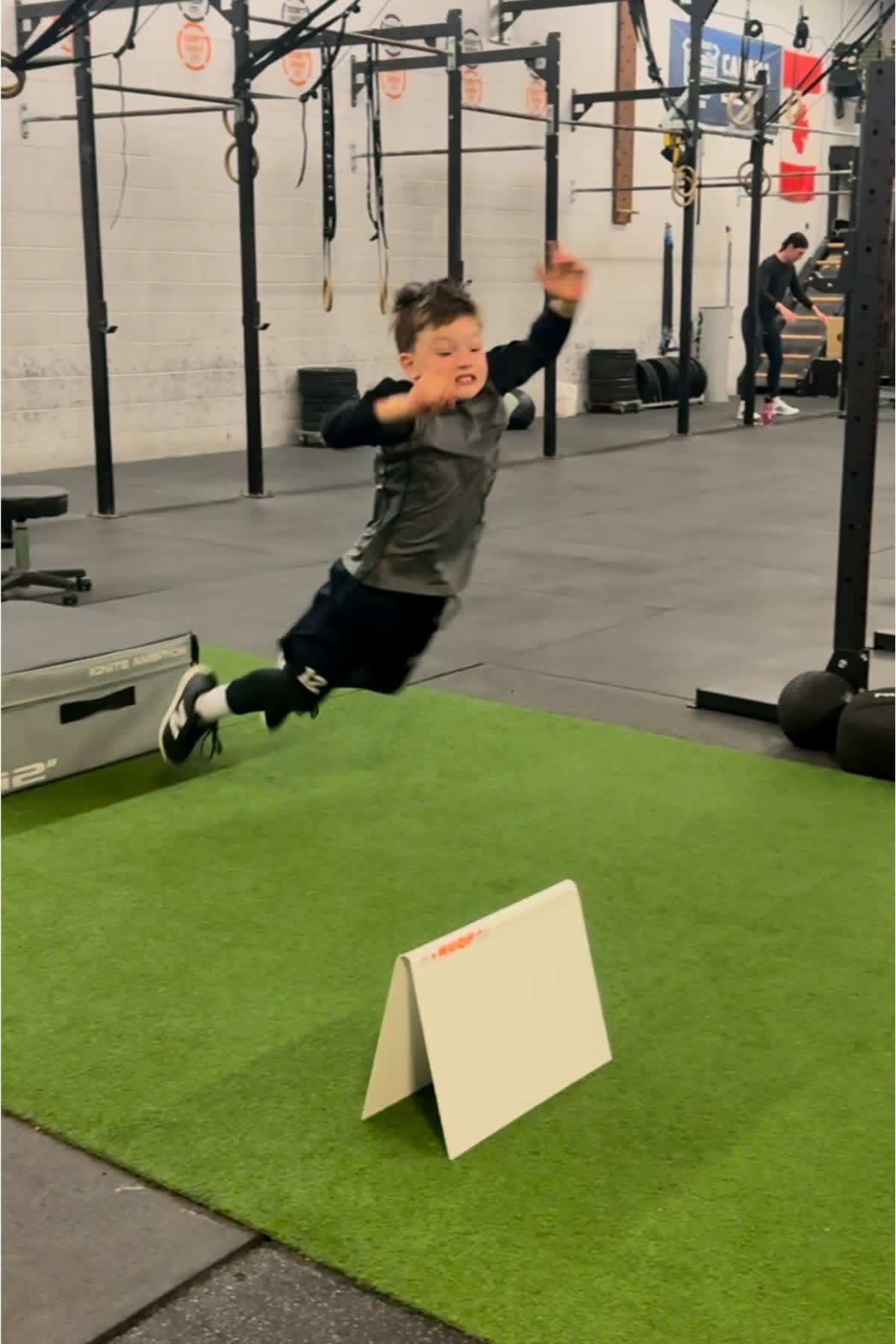
Most injuries happen when you try to stop or land, not when you take off. If you’re a baseball player planting hard to throw or a soccer player cutting, you need "brakes." We use Depth Drops and Eccentric Loading to make sure your joints can handle the deceleration of the game, as well as unilateral movements for balance and agility.
3. Addressing the Weak Links
We use our movement screenings to find where you’re leaking power. If we saw your knees caving (valgus) during the winter, we aren't going to let that slide in the summer. We keep the hamstrings and glutes awake and firing. This is the pre-hab that keeps you on the field while everyone else is in the physio’s office.
Baseball-Specific Maintenance
For our baseball players, in-season work is a total necessity to keep velocity up and arms healthy. Baseball is a game of extreme rotational power and repetitive stress. If you stop strengthening your foundation, your mechanics will start to break down as the season drags on. We prioritize rotational core stability to keep your swing powerful and posterior chain work to ensure your legs are still driving that fastball in the 7th inning.
Real-Life Movements That Save Your Season
We use specific exercises to address the weak links in your armour:
- The Goblet Squat: Keeps your hips mobile and your legs strong without the spinal loading of a heavy back squat.
- Single-Leg RDLs: Essential for ball players to iron out imbalances and protect the hamstrings.
- Banded Face Pulls: A pre-hab staple to keep shoulders healthy and resilient for throwing.
- Trap Bar Deadlifts: The king of in-season pulls. It puts the body in a safer position than a straight bar, allowing us to maintain massive lower-body power with less risk.
We’ve seen it with our athletes—the ones who stay consistent are the ones still hitting PRs in their sport while their competitors are fading.
Ready to stay strong?
Stop letting your off-season hard work go to waste. Let’s build a maintenance plan that fits your schedule.